



Updated 11/16/23
Originally published 09/01/2020
Table of Contents
Does sugar impact your gut health?
As dietitians, we get a lot of questions about sugar. Today, we’re compiling all our recommendations on this topic in one place. But first, here are a few fun facts about sugar.
Interesting facts about sugar
- Sugar acts as a sweetener and also preserves food to prevent spoilage.
- Genetically modified sugar beets contribute to approximately half of the sugar added to food in the United States.
- Cane sugar is the other primary source of sugar in the United States.
- The Non-GMO Project considers cane sugar a “monitored risk” for genetic modification.
- Sugar cane was once a luxury for the rich, but it became common in New Guinea around 8000 BC.
- A single teaspoon (4 grams) of sugar has 15 calories.
Americans eat too much sugar on average, consuming 42.5 teaspoons per day. This exceeds the recommended amount. If you ingest 42.5 teaspoons of sugar daily for a year, it would amount to 152 pounds.
Estimates show that the average individual consumed two pounds of sugar annually two centuries ago.
If you’re doing the math, the current population has increased sugar consumption by 150 pounds yearly!
Natural versus added sugar
Natural Sugar
- Fruits, dairy products (except cheese), and certain starchy vegetables contain natural sugar.
- Most people shouldn’t worry about naturally occurring sugar since it exists in foods with health benefits.
- For example, dairy has calcium, vitamin D, and iodine. Fruits and veggies have antioxidants, fiber, and essential vitamins and minerals.
- To avoid too much sugar and control carbs, limit fruit to two servings daily.
Added sugar
- Food manufacturers add sugar to some processed foods during preparation, so you may be unaware you’re consuming it. We classify this as added sugar.
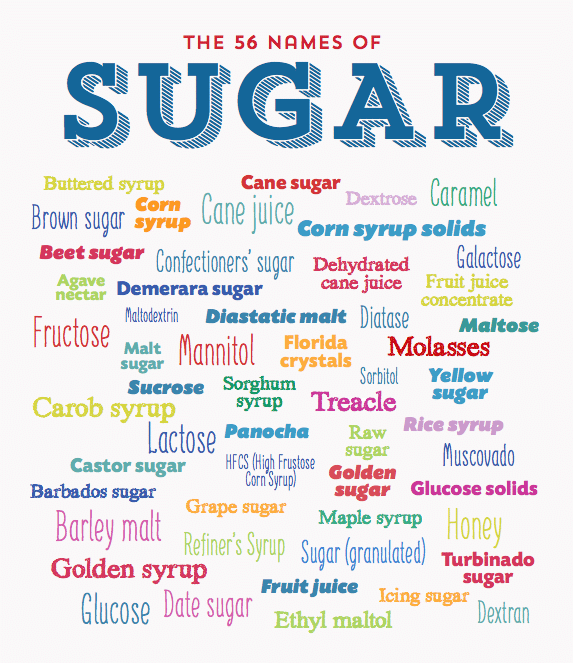
- You must check the ingredients list to determine if a food contains added sugar. This is tricky because sugar can ‘hide’ behind several names (more on this in a moment).
- In addition to being high in sugar, many processed foods are also low in nutrients.
- They also contain harmful artificial ingredients, chemicals, and preservatives. These components can be detrimental to your health.
Total sugar versus added sugar
Added sugar on food labels
To understand how much added sugar you consume, you must know how to read food labels.
Look at the added sugars line and choose foods with five grams of added sugar (or less) per serving.

Sugar on ingredients lists
Ingredient lists list ingredients by order of descending weight. This means you’ll find the most prevalent ingredient listed first and the least prevalent ingredient last.
If sugar is near the beginning of the ingredients list, the item will likely have more added sugar.
Obvious ingredient names, such as cane sugar, indicate the presence of added sugar. You can also find sugar under trickier names like high fructose corn syrup, brown rice syrup, or dextrose.
Foods high in sugar
The following items are the major sources of sugar in the typical American’s diet:
- Regular sodas
- Sweets
- Pastries
- Biscuits
- Tarts
- Fruit beverages
- Juices and punches
- Dairy desserts and milk-based products
- Ice cream, sugared yogurt, and sweetened milk
How much sugar is okay to consume?
This topic is really interesting – we couldn’t disagree more with current recommendations. We think they are way too high! For a long time, there wasn’t a daily value (DV) for sugar because it’s not a recommended nutrient.
However, for clear guidance and to help people understand how much sugar they are consuming, the FDA announced a DV for sugar in 2016. This is now on all food labels. The DV for added sugar is 50 grams per day (which is 10% of your daily calories if you consume 2000 calories each day) or the equivalent of 12 teaspoons.
The Dietary Guidelines for Americans are in agreement with the FDA recommendations, with the goal of helping people move towards healthier eating patterns. Since people are so far off target now, it sounds like they are providing guidance to reign people back in.
The American Heart Association’s recommendations for added sugars are:
- AHA recommends that women consume a maximum of 6 teaspoons (24 grams) of added sugar daily.
- Men, on the other hand, per AHA, should limit their intake to 9 teaspoons (36 grams) of added sugar per day.
Remember, it’s not recommended to consume this much – it’s recommended to consume no more than this much.
Our opinion? Working in the gut health space, I promise you that less is more for sugar intake. Keep reading though, we have recommendations for managing a sweet tooth below!
Sugar and gut health
The key to a happy and healthy gut is a robust microbiome (meaning you have a good variety and a high amount of helpful bacteria thriving in your gut). A diet full of nutrient-dense foods is key to maintaining this environment.
When someone consumes excessive amounts of sugar, it starts displacing healthier foods in his or her diet. According to research, this occurs when sugar accounts for over 9% of caloric intake.
Probiotics and sugar
Consuming too much added sugar can wreak havoc on your microbiome.
- While sugar doesn’t kill probiotics, it can disrupt the balance of your microbiome by contributing to the overgrowth of harmful bacteria and yeast.
- Here’s another fascinating fact about sugar and gut health. When you have a diet high in processed foods, added sugar, and lacking in whole foods, nutrient deficiencies are likely to occur!
- Nutrient deficiencies can create food cravings, stress, and anxiety, which further increase your desire for sugar! This will eventually lead to digestive problems due to the imbalances brewing in the microbiome, as well as metabolic dysfunction.
Sugar and leaky gut
- Sugar creates tiny micro-tears in the gut lining, leading to increased permeability, also known as leaky gut.
- Too much sugar in your diet can contribute to cavities and tooth decay – this is a symptom of nutrient deficiencies and a reflection of an imbalanced oral microbiome.
- Sugar can weaken your immune system, exacerbating a leaky gut and leading to increased illness.
Sugar and metabolic health
The health implications of sugar don’t stop with the gut. Regarding metabolic health, high sugar intake correlates with diabetes, weight gain, some cancers, and heart disease.
When consumed without fiber (as is usually the case with added sugar), sugar can cause blood sugar to spike. When blood sugar is constantly high, insulin resistance (also known as pre-diabetes and type II diabetes) can occur.
The nutrient deficiencies caused by a poor diet (lots of sugar and processed foods) also contribute to insulin resistance.
How Can I Avoid Added Sugar?
The answer is simple: eating whole foods can help avoid added sugar.
Whole foods are in their most natural state (or something you would find on the food chain).
Example: A baked potato is a whole food, while a potato chip is a processed version of that food. You would easily find a potato on a food chain, but never a potato chip!
Tips for decreasing added sugars in your diet
- Add fresh fruit to cereal or oatmeal instead of sugar
- Buy fresh or frozen fruits instead of fruits canned in juice
- Use extracts such as almond, vanilla, orange, or lemon or sweeter spices such as ginger, allspice, cinnamon, or nutmeg
- Substitute unsweetened applesauce for sugar in recipes (use equal amounts).
What to do if I have a sweet tooth?
Here are some low-sugar but still sweet options for sugar cravings:
- Make your own trail mix.
- Fresh or dried fruit
- Create a fruit and yogurt parfait and top it with granola
- Try eating a decent protein source, like nut butter (peanut butter, almond butter, or cashew butter) instead.
- Make baked apples and top with cinnamon and butter
Lastly, sugary foods don’t satisfy hunger on their own. If you’re going to have a sweet treat, be sure to pair it with a healthy fat or protein to help you feel satisfied.
Is sugar addictive?
Possibly!
- Call us biased, but we tend to link sugar addictions and sweet tooth issues to imbalanced gut bacteria.
- Some studies have shown sugar addiction could be genetic.
- Additionally, consuming sugar can cause you to feel calm during times of stress (this could certainly be addicting). Stress alters our body chemistry, prompting us to overeat and crave sugary foods.
Substitutes for sugar
Sugar alternatives have fewer calories than sugar, but it’s best to consume them in moderation because of potential health risks.
- Sugar substitutes may cause you to crave more sweet and sugary foods
- Some studies have linked sugar substitutes to a higher risk of glucose intolerance or weight gain
- We also aren’t a fan of sugar alcohols due to their adverse effects on the microbiome.
FAQs
Does sugar feed bacteria?
If you are having digestive problems and think sugar may be making them worse, you’re probably right. Overgrown pathogens (yeast and opportunistic bacteria) and parasites can cause sugar cravings. These unwelcomed guests love sugar as a fuel source and use it to reproduce and continue living in your gut. If you notice a correlation between sugar intake and digestive issues, a stool and SIBO test are a must!
What is the difference between total sugar and added sugar?
Total sugar is the sum of naturally occurring sugars (in fruit for example) and added sugars. Added sugars include sugars added during food prep or processing.
What is the daily value (DV) of added sugar?
The DV for added sugar is 20% or 50 grams per the FDA. We feel it is way too high!