



Table of Contents
Supporting detoxification naturally
The word detox has become a trendy term used in marketing campaigns by companies trying to sell supplements, teas, or cleansing programs. “Detox” has been used to describe everything from restrictive juice cleanses to huge supplement regimens touted to detoxify the body. We’re NOT promoting that type of “detox” which can actually be harmful to your health (think unnecessary food restrictions or intentional purging )
Instead, we recommend supporting your body’s natural detoxification ability, and here’s how.
When you hear the term detox, you might think back to high school biology class and remember that you do have organs (think the liver, kidneys, lymph, and skin) that are constantly working to detoxify your body. The issue arises when there becomes a backup in these organs and pathways. There can be various reasons this happens, such as toxin overload, certain medications blocking detoxification pathways, or lack of necessary nutrients.
Let’s start by clearing up some myths about detoxification. Then we will dive into the organs responsible for elimination and detoxification. We will also discuss how to figure out if your drainage pathways are open (which keeps things flowing for healthy detoxification) and what to do if they’re not.
Please note, this blog post contains affiliate links. The Nutrition Clinic for Digestive Health earns a small commission from qualifying purchases at no additional cost to you.
Detox and Drainage
Detox literally means grabbing onto chemicals, toxins, or poisons in the body and pulling them out of the body.
Drainage, on the other hand, is the term used to describe the normal pathway that has to flow to eliminate anything unnecessary in the body. If your drainage pathways aren’t open and flowing properly, your ability to detoxify suffers.
Drainage is the part a lot of people miss when they “detox.” Sluggish drainage pathways are one of the reasons why detox programs can become dangerous.
Anything can get backed up and, therefore, overly abundant when drainage pathways aren’t flowing well. If we’re not draining properly, unwanted substances (toxins, bacteria, viruses, cholesterol, bile, etc) will be mixed back into the blood instead of being eliminated from the body. Once in the bloodstream, these toxins can create damage!


Think of the drain in your bathtub or shower.
Water comes in through the faucet and leaves the tub via the drain. Now, consider if the drain is plugged or clogged. Water is still coming in, but it has nowhere to go because it cannot get out via the drain.
Eventually, the bathtub will overflow. This can cause a lot of damage in the bathroom and then if not fixed, it can leak into other areas of the house causing damage there, too.
The Drainage Funnel
The key to successfully detoxing is a properly flowing drainage funnel.
Keep this funnel image in mind as you read on.
As with a funnel, think about starting at the bottom first. We must open the organs at the bottom before opening the organs above them.
Colon
At the very bottom of the drainage funnel, the colon (aka large intestine) must be flowing to be able to detoxify well. The colon is responsible for absorbing water and electrolytes from food. The bacteria living in the colon will then break down the remaining waste and stool is formed.
Here are two key factors we take into account when working with clients to assess digestive health:
- Referencing the bristol stool chart (below), the consistency of your stool should be either a 3 or 4 (not too loose and not too solid). If your stools are trending towards the 1 or 2 on the Bristol Stool Chart, or if you’re going days without having a bowel movement, this can indicate constipation. If you tend to have stools that look like a 5, 6, or 7, (these are considered loose stools) they can indicate other health issues such as malabsorption, bacteria overgrowth or food intolerances.
- Everyone should poop 1-2 times per day. Yes, everyone…
Symptoms of a sluggish colon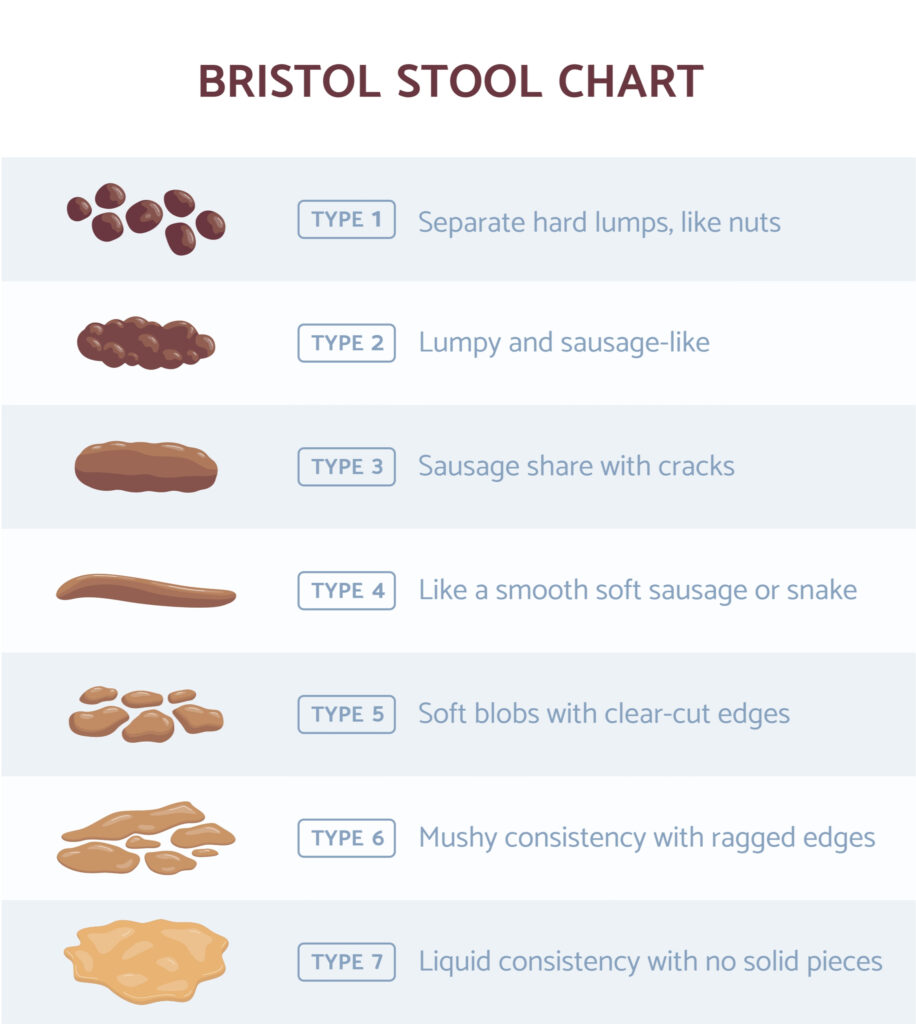

- Yellow, greasy, or shiny stool
- Stool with mucus
- Red or black stool
- Diarrhea
- Constipation
- Straining during bowel movements
Tips for a healthy colon
- Make sure you are drinking enough water (at least half of your body weight in ounces)
- Cut back on diuretics like coffee, soda, alcohol, and tea
- Consider food intolerances such as dairy
- Try this constipation cocktail to increase fiber intake
- Incorporate gentle movement daily, such as yoga, walking, or dancing, to stimulate movement in the bowels
- Run a comprehensive thyroid panel because hypothyroid can cause constipation
Supplement recommendations
- Magnesium citrate can help to relax the GI tract – We suggest starting with 300mg of powdered magnesium citrate and increasing by 150mg every 3-5 days if needed.
- Cellcore Bowel Mover – contains certain herbs like aloe vera, ginger, fennel and more, that promote the natural movement of the intestines.
- How to order: register a customer account with CellCore, you’ll need to use the patient direct code rNTD3V7I to create your account.
Liver and Bile Ducts
Above the colon, the liver and bile ducts need to be open next. The liver is typically the first organ we think of when considering detoxifying the body because it’s responsible for filtering the blood. Once filtered, it sends the products by bile to be excreted through the colon as poop or by blood to be excreted by the kidneys as urine.
Explaining the 500+ functions of the liver are beyond the scope of this post, but here are the most relevant ones:
- Produces bile which carries away waste filtered from the blood
- Converts ammonia (which is poisonous) into urea which is then sent to the kidneys to be excreted through urine
- Metabolizes medications
- Clears toxins
- Removes bacteria and other infectious agents
The bile duct is the tube that carries the bile from the liver and gallbladder into the small intestine to begin breaking down food. Bile is key for so many processes in the body to work well:
- It’s needed for the proper breakdown of fats and absorption of fats, calcium, iron, and fat-soluble vitamins (A, D, E, K)
- The mucin in bile lubricates the GI tract
- Stimulates movement of food through the GI tract
- Responsible for excreting excess metals like copper, zinc, and mercury, excess cholesterol, and unwanted toxins
Symptoms of a sluggish liver or bile duct
- Gallstones
- Need for gallbladder removal
- Pain in the right upper quadrant of the stomach
- Undigested food in poop
- Nausea and pain after eating sources of fat
- Itchy skin, hives or rashes
- Diarrhea
- Heartburn
- Sinus issues
- Irregular cycle
- Inability to tolerate caffeine or alcohol
- Irritable if skipping meals
Tips for a healthy liver and bile duct
- These mindful eating tips help your body relax, which increases bile output and buys time for it to reach the small intestine:
- Chewing each bite of food 20 – 30 times before swallowing
- Deep breathing before meals to initiate the relaxation response
- Eat sitting down at a table while focusing on your meal; not distracted by TV, email, or in the car
- Increase intake of cruciferous vegetables such as broccoli, cauliflower, cabbage, kale, Brussels sprouts, and root vegetables such as carrots, beets, and sweet potatoes
- Because emotions such as anger and frustration can be stored here, consider talk therapy or counseling to work through these
- Consume more cholagogues to stimulate bile flow from the liver such as artichoke, dandelion, radishes, chicory, mustard greens, and turnip greens (this is NOT recommended if you have a history of gallstones, liver disorders, or obstructive jaundice)
Supplements that support the liver and gallbladder
- Try adding digestive bitters to your water a few minutes before meals to stimulate bile flow
- BileMin – contains phytonutrients, plant-based enzymes, and phospholipids that support the liver and gallbladder including vitamin C, dandelion root extract, milk thistle extract, taurine, and ginger.
- Cellcore Advanced TUDCA stimulates the release of bile along with supporting the detoxification pathway.
- How to order: register a customer account with CellCore, you’ll need to use the patient direct code rNTD3V7I to create your account.
- We recommend slowly working up to a full dose of Biotoxin binder, then adding in Advanced TUDCA for additional liver detox support.
- How to order: register a customer account with CellCore, you’ll need to use the patient direct code rNTD3V7I to create your account.
Lymphatic System

The lymphatic system is the next step in opening your drainage funnel. It serves several functions:
- The lymph system is a circulatory system (similar to blood) found throughout the entire body. It contains a network of tubes, or vessels, and lymph nodes.
- Lymph vessels drain fluid from the organs, while lymph nodes filter pathogens, bacteria, and toxins out of the fluid so that immune cells can respond to them.
- The lymphatic system also absorbs dietary fats: cholesterol, phospholipids, and fatty acids.
Unlike blood circulation, the lymph system has no pump and can become sluggish if we’re not actively moving our bodies.
Symptoms of sluggish lymph include
- Cellulite
- Adhesions or scarring
- Eczema or other skin rashes
- Edema or swelling
- Inability to sweat
- Feeling puffy
- Low immune function
- Brain fog and other cognitive issues
How to cleanse your lymphatic system
- Physically activate lymph nodes and flow by using lymphatic compression, lightly tapping at lymph nodes, or dry skin brushing
- Get a specific type of massage, either Rolfing (addresses fascia adhesions) or lymphatic drainage
- Change the position of your body by standing instead of sitting, rebounding on a trampoline, or using inversions placing your feet up a wall while laying on your back
- Get your body to sweat by using a Infrared sauna, wearing sweat suit while exercising, or getting your heart rate up during a workout
- Use deep breathing exercises that promote movement of the diaphragm
- Drink green tea or matcha
- Take a cold plunge or finish your shower with a few minutes of cold water
- Use a gua sha stone or jade roller on your face
Supplement recommendations
- Cellcore LymphActiv – includes herbs (burdock root, sheep sorrel, turkey rhubarb, slippery elm bark, astragalus root, graviola, and chuchuhuasi) that act as a mild diuretic to promote fluid drainage.
- How to order: register a customer account with CellCore , you’ll need to use the patient direct code rNTD3V7I to create your account.
Organs and Tissues
The next part of the drainage funnel is the organs and tissues which leak fluid into the lymphatic system. Specifically, we want to optimize drainage from the brain, lungs, and kidneys.
Brain
The brain clears its waste into the glymphatic system which then drains to the lymphatic system. But it can only do this during sleep! Getting 7-9 hours of high-quality sleep is the key to optimizing brain drainage.
Symptoms of sluggish brain flow
- Brain fog
- Headaches
- Trouble with recall
- Mixing up words
- Other memory issues
Tips for better sleep
- Get more sunlight during the day, preferably around noon
- Avoid screens or blue light 1-2 hours before bed. Use a blue light blocker if you must be on technology near bedtime – these are available for purchase in our Amazon store. You can also adjust brightness settings on electronics for less light in the evening
- Cut caffeine out or stop consuming earlier in the day. Typically 2:00 pm is a good cut-off time, if you’re more sensitive to caffeine you may need to cut consumption out a little earlier in the day.
- Sleep in a cool dark room with white noise. Research suggests the ideal room temperature for sleep is between 60 and 70 degrees Fahrenheit
- Create a calming bedtime routine. Try things like meditating, stretching, reading a book, or taking a bath.
- Try sleeping with a weighted blanket.
- Consider craniosacral massage therapy.
- Try having a cup of chamomile tea before bed to calm the mind and body.
Supplement recommendations
- Try 300mg of magnesium glycinate about 30 minutes before you want to fall asleep
- Zenbiome calm – contains a unique strain of Bifidobacterium longum, with B vitamins and Spanish saffron to support the gut-brain axis to promote a calm demeanor
- Trancor – contains NAC, taurine, EGCG from decaffeinated green tea extract, and B6 to support tranquil sleep
Lungs
The lungs of course help move oxygen and carbon dioxide in and out of the body, but did you know they also act as filters? We constantly breathe in things that would be harmful if it wasn’t for the filtration of the lungs. Polluted air, dust, bacteria, and viruses would be much more threatening without our natural filtration system.
Sneezing and coughing are two ways the body protects itself against toxins entering through respiration.
Signs of needing extra respiratory support
- Recurring upper respiratory infections, pneumonia, bronchitis, asthma
- Constant cough or wheezing
- Trouble catching breath when exercising
- Extremities are cold, blue-tinted or tingly
Tips to support the lungs
- Consider using a neti pot
- Try aromatherapy or steam therapy
- Get a cupping massage
- Try chest tapping
- Practice breathwork such as yoga Nidra or box breathing
- Consider purchasing a high-quality air filter for your home
Kidneys
The kidneys help filter blood and remove waste through the urine. They also control electrolyte levels which is essential for maintaining bone health and normal blood pressure.
Symptoms associated with sluggish kidneys
- Urinary incontinence
- Dramatically increased or reduced need to urinate not related to changes in hydration
- Dehydration or dark urine
- Vertigo, fainting, or lightheadedness
- Edema
- Extreme and constant fatigue
Tips to support the kidneys
- Keep hydrated by consuming plenty of water – we recommend drinking half your body weight in ounces.
- Try herbal teas, sparkling water, or infusing water with fresh fruits and herbs to increase water intake.
- Increase intake of potassium-rich foods such as citrus fruits, avocados, and bananas
- Reduce sources of sodium through canned foods, frozen, and packaged foods
- Switch to Redmond’s real salt instead of table salt
Supplement recommendations
- CellCore KL Support – includes herbs and nutrients such as beetroot, milk thistle, and NAC.
- CellCore CT minerals – contains rosemary leaf oil, thyme leaf oil, clove bud oil to provide commonly missing minerals.
- How to order: register a customer account with CellCore , you’ll need to use the patient direct code rNTD3V7I to create your account.
Cells and mitochondria
Mitochondria are found in most cells and are commonly referred to as the powerhouse of the cell. They turn energy from food into the energy your body uses to function.
When there is a threat, the mitochondria use available cellular energy to support the body. Think about how tired you feel when you are sick or run down. This is partly because some of your energy is being used to communicate with the immune system rather than power your cells.
Mitochondria serve several functions beyond just energy creation, such as:
- Forming heme (which carries oxygen around the body)
- Creating steroid hormones
- Stimulating the death of damaged cells
- Fighting viruses
- Generating heat
- Repairing DNA
Symptoms of needing mitochondrial support
- Extreme and chronic fatigue
- Brain fog
- Forgetfulness
Tips for healthy mitochondria
- Infrared sauna and red light therapy
- Increase antioxidant intake through CoQ10, high doses of vitamin C, or ALA
Supplement recommendations
- BC-ATP – includes carbon-based polyelectrolyte and polysaccharide extracts of fulvic acid to support mitochondrial ATP (or energy) creation.
- How to order: register a customer account with CellCore, you’ll need to use the patient direct code rNTD3V7I to create your account.
Conclusion
Detoxification is a complex process that doesn’t just start and stop with the liver. If your drainage funnels aren’t flowing toxins won’t be removed. When bile and toxins can’t be excreted through the colon, they recirculate through the blood. Once in the blood, they can cause symptoms throughout the body resulting in the symptoms listed throughout this post.
If you’re experiencing multiple symptoms related to one or more parts of the drainage funnel, we recommend starting by opening the system closest to the bottom first (the colon). A comprehensive detoxification program starts with flow and drainage and assesses the entire person – mind, body, and spirit.
Our motto when starting to open drainage funnels via supplementation is always to go low and go slow!
Disclaimer: The dietitians at The Nutrition Clinic for Digestive Health are not physicians or psychologists, and the scope of their consultation services does not include treatment or diagnosis of specific illnesses or disorders. The information provided here is for educational purposes only. Content related to nutrition is not medical advice, nor is it intended to replace medical advice. The information on this website is not intended to diagnose, prescribe, or treat any disease, condition, illness, or injury. Before beginning any diet program, modifying your diet, or making changes to your diet, including following the nutrition information available on this website, you should seek advice from a licensed professional.