


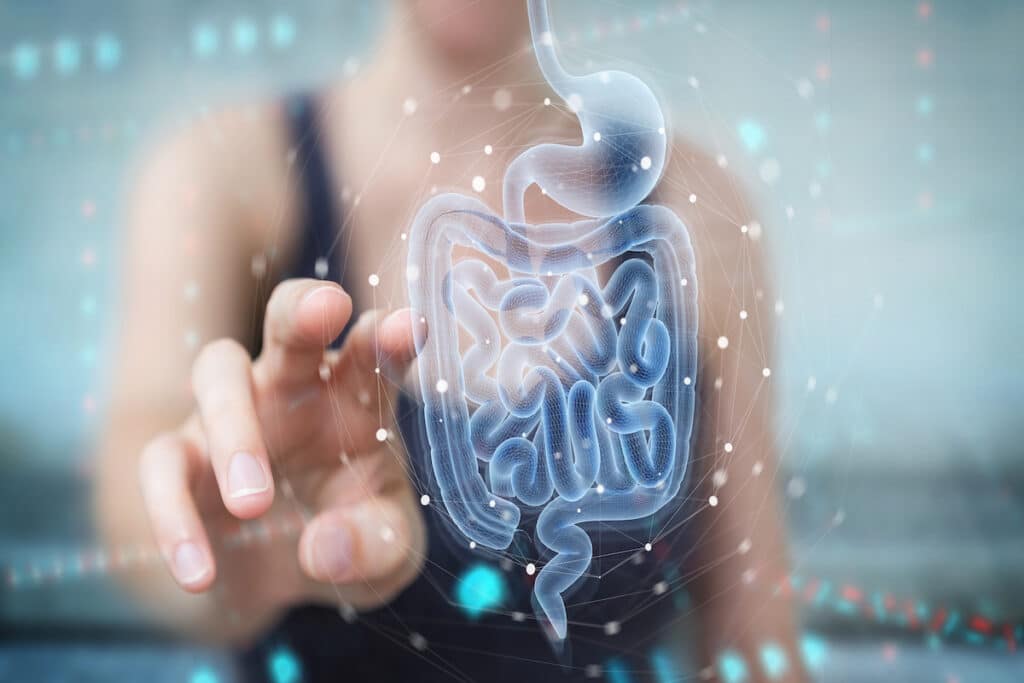
Small intestinal bacterial overgrowth (SIBO) is quickly gaining recognition as an underlying cause of irritable bowel syndrome (IBS) and other common digestive disorders.
Once SIBO is identified, multiple treatment options and dietary protocols can be used, depending on the type of SIBO present and the preferences of the affected individual.
A common issue with SIBO clients is getting through the recommended protocols while keeping the side effects of SIBO die-off to a minimum.
This blog post explains SIBO, how it’s managed, and tips for handling unwanted die-off symptoms.


Are you looking for a SIBO expert?
We specialize in hard-to-treat SIBO cases.
Stop guessing and start feeling better!
Prefer the phone? Just call or text 678-424-6520
- What is SIBO?
What is SIBO?
SIBO occurs when there are too many bacteria living in the small intestine (1).
The main functions of the small intestine are to break down food and absorb nutrients (2).
In a healthy gut, the large intestine should house the majority of the microbiome. It’s primary functions are to break down fiber, produce food for the cells in the colon, and help the cells of the immune system thrive (3, 4).
The acidic environment of the small intestine along with bile and enzymes typically keep the bacteria at bay.
Consequences of bacterial overgrowth in the small intestine include (5):
- Less nutrient absorption from food
- Damage to the lining of the GI tract
- An increase in toxins that are able to pass into the bloodstream
This cascade of issues in the small intestine can cause various symptoms throughout the entire body.
Symptoms of SIBO
Symptoms of SIBO can vary dramatically based on the severity and cause of the overgrowth.
- Bloating (a hallmark sign of SIBO)
- Gas
- Abdominal pain or discomfort
- Diarrhea
- Constipation
- Fatigue
- Malabsorption (not digesting and absorbing food and nutrients well)
- Weight loss
- Steatorrhoea
- Vitamin and mineral deficiencies
- Rosacea
- Joint stiffness


We believe that healing your gut is possible.
Here’s what one of our clients had to say after working with Rachel…

Rachel Silva is awesome! I have found Rachel to be so very knowledgeable about my digestive issues which include IBS C and SIBO.
Rachel suggested tests that my gastro doctor never mentioned and worked extremely hard to ensure she was doing everything she could for me.
Rachel is very responsive and truly cares about her patients. I feel more “heard” by Rachel than any doctor. I recommend her highly!
K.N. – former SIBO client
SIBO Protocols
While it is beyond the scope of this post to discuss the treatment options in detail, we do want to mention them quickly.
The 5R Framework for Gut Health
As functional dietitians, we use The Institute of Functional Medicine’s 5R framework to address all GI issues and to optimize overall health. Here is a brief overview of the 5R’s:
- Remove stressors or triggers negatively impacting the gut such as SIBO, parasites, yeast, and food intolerances.
- Replace anything that is required for optimal digestion such as Betaine HCl, pancreatic enzymes, and bile salts.
- Reinoculate with probiotic and prebiotic food and supplements to create a more robust microbiome.
- Repair the lining of the GI tract through specific nutrients and anti-inflammatory support.
- Rebalance by modifying lifestyle choices that impact the gut such as sleep, stress, movement, and environment.
SIBO Treatment Options
At our clinic, when we work with SIBO patients, we start with the remove phase of the 5R protocol (referenced above). Depending on how each client presents, we will do this using a combination of herbs and either the elemental diet, a low FODMAP diet, or a customized anti-inflammatory/low FODMAP diet combination. More information on each of our approaches can be found below.
Prescription medications are out of our scope of practice, but we do have some helpful information below should you choose this option.
- Herbal Antibiotics – Blends of herbs and mega-dose nutraceuticals are commonly used to rebalance the microbiome when SIBO occurs. Many herbs act as antibacterials in addition to having antifungal and antiparasitic effects. This can provide an added benefit of cleaning out other unwanted guests that could be living in the gut. Another benefit to using herbs to eradicate SIBO is that they are a little more discriminatory between good and bad bacteria in the gut, so they won’t wipe out as many “good guys” as prescription antibiotics. Herbal protocol recommendations vary depending on the type of SIBO identified and individual tolerance to herbs.
- Elemental Diet – This is a nutritionally complete, all-liquid diet for at least two weeks! It’s tough but very effective. In one study, participants with SIBO were put on an elemental diet for 2-3 weeks. In just 2 weeks, 80% of the participant’s symptoms improved, and in 3 weeks, 85% of the participant’s symptoms improved(7). Easy to digest, broken down nutrients (in the form of a formula, mixed with water) give the digestive system a break while starving the overgrown bacteria.
- Low FODMAP Diet – Limits high FODMAP foods to starve the overgrown bacteria. Supplements are often used to speed up this process. A good sign someone’s SIBO has been corrected is when they can tolerate higher FODMAP foods again.
- Our practice also offers the LEAP/MRT anti-inflammatory diet protocol. With SIBO patients we often layer this with a low FODMAP diet which gives the added benefit of decreasing inflammation while starving the overgrown bacteria. Inflammation feeds dysbiosis and dysbiosis feeds inflammation. Tackling both at the same time helps to break that cycle.
- Prescription Antibiotics – As dietitians, it’s out of our scope of practice to prescribe medication. When clients want to go the prescription route, we work with their physician to make sure they are getting the antibiotics with the best evidence for SIBO. The most up-to-date and reliable information regarding prescriptions for SIBO can be found on Dr. Siebecker’s website.
What happens when bacteria die-off?
When the excess bacteria are killed during SIBO treatment, toxins are released.
The immune system responds to the release of toxins by releasing inflammatory cytokines. Cytokines tell other cells to temporarily increase inflammation to protect the body.
This initiates a Herxheimer reaction – an inflammatory process that occurs when the body is detoxing from an unwanted substance. You may have also heard this referred to as herxing. The symptoms of SIBO die-off are a result of this process and are described below.
Symptoms of Die Off
Typical SIBO die-off symptoms include:
- Flu-like symptoms
- Headaches
- Skin eruptions/rashes
- Flushing
- Congestion and runny eyes/nose
- Muscle and joint pain
- Body aches
- Chills
- Sweating
- Fever
- Sore throat
- Malaise
- Fatigue
- Nausea
- Brain fog
- Worsening of SIBO symptoms
Die-off symptoms can be worse if there are co-infections such as fungal infections or parasites.
How long does die off last?
SIBO die-off can occur in the first several days after starting treatment. At our clinic, we tell clients to expect to feel worse for the first 1-10 days of a SIBO protocol. Die-0ff can also occur anytime the treatment protocol is adjusted by adding in another supplement, medication or making changes to dosage.
If symptoms last longer than two weeks or occur after you’ve been on your protocol for a while they’re probably not die-off symptoms.
How do you know if SIBO is dying off?
SIBO die-off can be indicated by the symptoms listed above.
We use the guideline that when symptoms are 90% improved, SIBO is likely gone. At this point, you can begin to liberalize your diet and work on continuing to heal the gut lining.
You can also re-test using the SIBO breath test to confirm your success. However, if you’re feeling 90% better, it’s probably not necessary.

How to Heal Your Gut in 5 Simple Steps!
Get a FREE copy of our ebook and start putting an end to your digestive problems TODAY!
Ten tips to reduce die-off
If you have a negative reaction to a SIBO protocol, it’s typically because the toxins released by bacteria dying off aren’t moving out of the body quickly enough.
When toxins build up with nowhere to go, they can be reabsorbed back into the bloodstream. Toxins in circulation can cause the above-listed die-off symptoms, potentially making you feel worse.
If you are experiencing die-off symptoms, we encourage you to use these tips. Many of them help open drainage pathways to support your body during detoxification!
1. Pull back or pause your protocol
If you’re following an herbal protocol, pull back on dosing to see if that relieves symptoms. You can also try pausing your protocol to see if that helps (it’s always possible you’re sensitive or intolerant to an herb that has been recommended).
When you’re ready to begin again, we recommend starting low and going slow. In other words, begin by adding in each supplement one at a time at the lowest possible dose. Every few days (as long as you feel okay), increase your dose.
Once you have worked up to the recommended dose, then add in the next recommended supplement.
If at any time you experience a reaction again, drop back to the lower dose and stay there until symptoms subside.
If you’re taking antibiotics, talk to the prescribing physician for advice on what to do.
2. Promote proper digestion
Taking digestive bitters before meals supports bile flow. Bile is one way the body detoxifies.
You may also need to add digestive enzymes and/or betaine HCl for digestive support.
3. Poop
Make sure you are pooping at least two times per day during your protocol. Magnesium, vitamin C, and plenty of water are safe and simple ways to get your bowels moving.
If you are constipated, try these specific probiotics to get you pooping.
4. Hydrate
Drink enough water to make your urine a pale yellow color. For most people that means consuming about half of your body weight in ounces.
If you consume diuretics such as alcohol or caffeine, your water needs will increase.
5. Sleep well
Prioritize sleeping 7-9 hours each night. Your body uses this time to repair damage and reduce inflammation.
6. Sweat
The body detoxifies via the skin by sweating. Try sitting in a sauna or over-dressing to walk on a hot day to get your body to sweat.
7. Use a Carbon-Based Binder
Binders work by grabbing on to toxins, thereby reducing die-off symptoms caused by excess toxins in circulation.
While traditional binders such as clay or charcoal can be somewhat helpful, we recommend using a carbon-based binder instead. Here are a few reasons why:
- Carbon-based binders have more binding capacity than clay and charcoal-based binders. Therefore, they are able to eliminate more toxins.
- Clay and charcoal-based binders can bind to stuff that you want to keep – like nutrients from food, supplements, and/or medications. Carbon-based binders are more selective in binding and are able to better identify and eliminate toxins.
- Carbon-based binders protect nutrients and herbs from being broken down by stomach acid. The protective effect of the carbon-based binder allows the nutrients and herbs to be used by the body.
- Additionally, carbon-based binders can also provide carbon, hydrogen, and oxygen to help repair the cells that were damaged by the toxins.
Our favorite carbon-based binder is Biotoxin Binder. You can order this product directly from Cellcore’s website using ordering code rNTD3V7I.
8. Add in extra supplement support
Supplements that have been shown to help reduce inflammation and in turn reduce die-off symptoms are vitamin C, curcumin, quercetin, and fish oil.
You can also take 2-4g of colostrum or immunoglobulins on an empty stomach to help strengthen the gut lining wall that can become damaged with SIBO (8).
Some die-off symptoms can be due to a mineral imbalance so we recommend adding in supplemental trace minerals such as CT minerals. You can order this product directly from Cellcore’s website using ordering code rNTD3V7I.
9. Soak in Epsom salt baths to relieve aches and pains
Add 3-4 cups of Epsom salt to your bathwater and soak for 20-30 minutes. This gives the magnesium enough time to be absorbed to reduce muscle and joint pain.
You can take Epsom salt baths daily when you are experiencing die-off symptoms.
10. Reduce stress
High-intensity exercise (such as HITT and long-distance running) should be avoided during this time. High-intensity exercise places additional demands and even stress on the body.
Reduce other stressors as well – this will be different for everyone. It could mean avoiding over-scheduling, stressful events, or even certain people.
During a SIBO protocol, your body needs to be in rest and digest mode so all resources can go towards healing and rebalancing.
Activities that can reduce your stress level include journaling, meditating, coloring, deep breathing, yoga, walking, and laughing.
Are you looking for a SIBO expert?
We specialize in hard-to-treat SIBO cases.
Stop guessing and start feeling better!
Prefer the phone? Just call or text 678-424-6520
When should you try a different approach?
If you have tried the tips we recommend here and your die-off symptoms persist after several weeks, it could be time to change your approach.
Here are some things to consider if you don’t feel like your approach is working:
- Are you on a diet to starve bacteria? We typically recommend SCD or low FODMAP (others can help too). We also love LEAP/MRT for additional guidance and an individualized approach to reducing inflammation.
- Could you be having an adverse reaction to a supplement, medication, or food?
- Are you targeting the right overgrowth? Recommendations for treating hydrogen, methane, and hydrogen sulfide SIBO are different!
- Do you need additional supplement support?
- Are you working to identify the root cause of your SIBO? SIBO may be the cause of your digestive issues, but what caused the SIBO? That should also be addressed.
Of course, we recommend working closely with a practitioner to help with troubleshooting.
Do you suspect SIBO? Or maybe you have tried unsuccessfully to get rid of it. If this sounds like you, our FODMAP program is perfect for you to get the individualized support you need!
Conclusion
SIBO often goes undiagnosed, so if you know you have it, you’re doing great!
Getting rid of SIBO can take multiple rounds of treatment.
You don’t get extra points for eradicating faster or even for herxing harder. Be kind to yourself and listen to your body when working on bacterial overgrowth. A slow and methodical approach is often best.
The help of an experienced practitioner and proper testing can save you months of painful elimination diets, wasted money on foods and supplements that might not help, and the pain and misery that can come from moving too quickly through a protocol that could do more harm than good.
If this post was helpful for you, be sure to check out our free e-book: How to Heal Your Gut in 5 Simple Steps.
Disclaimer: The dietitians at The Nutrition Clinic for Digestive Health are not physicians or psychologists, and the scope of their consultation services does not include treatment or diagnosis of specific illnesses or disorders. The information provided here is for educational purposes only. If you suspect you may have an ailment or illness that may require medical attention, then you are encouraged to consult with a licensed physician without delay.
How to Heal Your Gut in 5 Simple Steps!
Get a FREE copy of our ebook and start putting an end to your digestive problems TODAY!