




The connection between stress and the immune system often goes unrecognized in conventional medicine.
Stress is commonly thought of as something that occurs emotionally. While this is true, there are many other sources of stress on the body.
Uncovering hidden sources of stress and restoring balance is a large part of the work of functional nutrition, especially when it comes to helping our clients solve digestive problems.
This article is going to cover:
- Stress and how it affects the body
- Tests you can take to see if you’re dealing with inflammation
- How to destress through diet and lifestyle.
Table of Contents
Acute versus Chronic Stress
Acute Stress
Acute stress is caused by short-term events or injuries that place extra work on the body. The sympathetic nervous system kicks in and releases stress hormones like cortisol and adrenaline to help your body recover from an immediate stressor.
For example, you’re walking through your house at night to get a glass of water and stub your toe.
Your body will work to heal your injured toe, which results in heat and redness in the area. This inflammatory response is a natural part of the body’s healing process.
Chronic Stress
Chronic stress is a result of the body being under stress for a prolonged period of time. The body responds with an extended release of stress hormones.
Normally, the immune system is responsible for things like cleaning up damaged cells and protecting the body against harmful pathogens.
However, when the body is under constant stress, the immune system becomes overworked and isn’t able to function at its highest capacity.
Another way to think about acute and chronic stress is to picture the work of firefighters:
- Acute stress: Let’s say firefighters get called to a house that has caught fire, and then they work very hard for a short period of time to put that fire out. The firefighters put out the fire and then are able to return to the fire station, where they can do maintenance on their equipment, clean their uniforms, rest, and recover.
- Chronic stress: Now, picture a different scenario as those same firefighters are called to one fire right after another with no time to go back to the fire station. There is no time for recovery because they are constantly fighting fires. Eventually, their equipment starts to break down, their clothes need cleaning, and they need rest.
Examples of Stressors
Stress is usually associated with negative events. But what’s interesting about stress is that not all stressors are negative; some are positive (like renovating a house or planning a big event).
Stressors are anything that puts extra work on you/your body – here are some common examples:
- Running a marathon
- HIIT training*
- Pregnancy
- Job promotions
- Injury or infection
- Environmental toxicity*
- GI stress due to food sensitivities*
- Bacterial imbalance in the gut*
- Planning a wedding
- Job
- Relational
- Grieving
- Deadlines
- Extra responsibilities
- Financial
- Clutter/Being disorganized*
- Being overscheduled
*Commonly overlooked or hidden causes of stress
The Stress and Immune System Connection
There are several reasons that chronic stress takes a toll on the immune system.
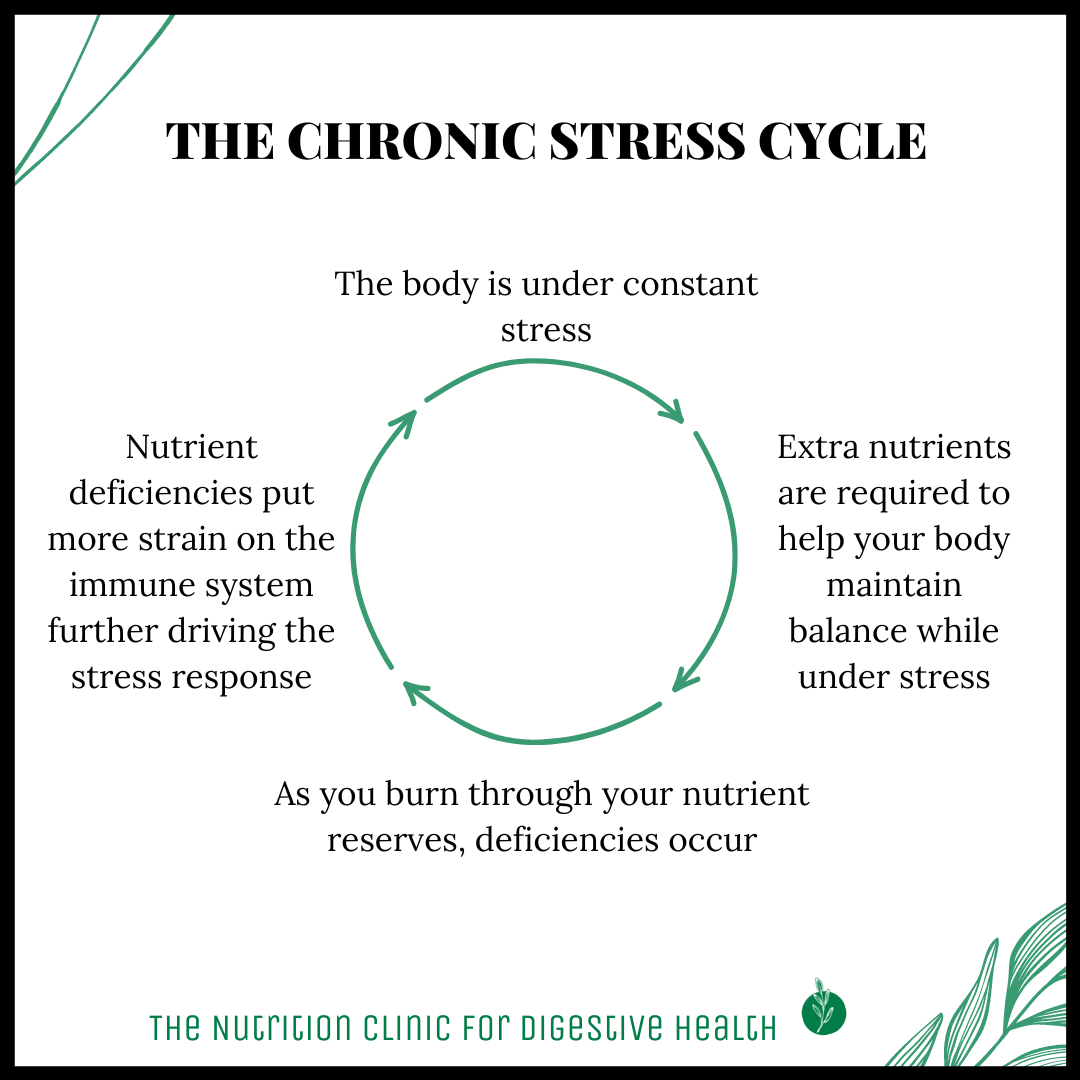
Do Low Nutrients Affect Cell Growth?
When we’re under stress, our body burns through nutrients like magnesium, zinc, vitamin C, and B vitamins, which are critical for a strong immune response. Even more interesting, these nutrients can easily become depleted, and nutrient deficiencies are another source of stress on the body!
A recent 2022 research study found that large amounts of chronic stress weaken the immune system’s ability to respond to infection (1). We can probably all relate to this! Have you ever gotten run down and sick after a period of stress?
This study also found that stress has an aging effect on the immune system (1). Again we have probably all seen or experienced this too. Have you ever seen someone who looks like their aging process sped up after going through a particularly stressful event?
Another study showed that chronic stress and depression can reduce the amount of cytotoxic T-cell and natural-killer-cell activities, which are key for immune system surveillance. (2).
Stress and Gut Health
- Stress affects the gut by sterilizing good gut bacteria. This creates opportunities for potentially bad pathogens to take over in the gut leading to bacterial imbalance (dysbiosis).
- Since 70-80% of the immune system cells live in the gut, this creates an altered immune response. Dysbiosis becomes a source of stress on the body.
- Dysbiosis can also make us more susceptible to food sensitivities. Food sensitivities are often the result of an overworked immune response and alterations in the gut lining.
- A calm and healthy immune system won’t over-respond to things that are not harmful.
- The stress response sends signals to the gut to either speed up digestion (resulting in loose stools) or slow down digestion (causing bloating and constipation).
- Diarrhea and constipation make it difficult to absorb nutrients from food, again resulting in nutrient deficiencies which further exacerbate the stress response.
Symptoms of Chronic Inflammation
Anyone experiencing chronic stress will start to experience inflammation as a result of an overworked immune system. Symptoms of inflammation vary from person to person but may include:
- Digestive issues
- Headaches
- Fatigue
- Anxiety
- Depression
- Frequent illness
- Fertility issues
- High blood pressure
- High cholesterol
- Unexplainable rashes
- Acne
- Thyroid disorders
- High blood sugar
Chronic Inflammation Tests
Are you wondering if you’re chronically inflamed? There is NOT just one marker that can tell you if you’re in a state of chronic inflammation. But if several of the following are elevated, then it’s very likely.
The following blood tests are typically run on a standard lab panel and can be easily ordered by your primary care doctor:
- Homocysteine
- hs-CRP
- Sedimentation Rate
- Albumin
- Globulin
- Elevated white blood cells (eosinophils, neutrophils, basophils, monocytes)
If you don’t have a good relationship with your primary care doctor, or if he or she is not open to ordering the testing you want, our clinic offers the options below.
Vibrant Functional Nutrition Metabolic Panel
This testing panel was put together by our team of dietitians as a comprehensive functional nutrition workup and includes several markers for inflammation.
This panel tests for the following:
- Celiac disease
- Thyroid disorders
- Blood sugar imbalances
- Cardiovascular health
MRT Test
This is a blood test for food and chemical sensitivities, which directly cause inflammation.
- Blood test results are used to create an individualized anti-inflammatory diet, which allows the body to heal and rebalance naturally.
- The panel includes 170 foods and chemicals.
Genova GI Effects
This three-day stool test includes markers of inflammation, specifically in the GI tract and also systemically.
Tips on How to Maintain a Healthful Diet During Times of Stress
- Reduce the amount of raw vegetables you’re eating. These are more difficult to digest than cooked. If you have a super sensitive tummy, you might even consider cooking your fruits as well.
- Increase your intake of soups and smoothies. Because these food items are broken down and/or cooked, they are easier to digest.
- Skip foods with high amounts of anti-nutrients. These include phytates and lectins found in grains or beans. If you do eat grains or beans, use soaked and sprouted versions to reduce the anti-nutrient content.
- Eat fewer refined foods. Refined foods have fewer of the nutrients that fuel the immune system, like vitamin C, zinc, glutamine, and B vitamins (3). If you fill up on less nutritious, refined foods, you are displacing more nutritious foods {like colorful fruits and vegetables} with immune-boosting properties.
- Go lower carb. High carbohydrate foods (especially when eaten by themselves) can cause elevated blood sugar. Elevated blood sugar is a stressor on the body that weakens the immune response (4).
- Eat less sugar. Sugar is a double whammy! It not only raises blood sugar, weakening the immune response, but it also feeds the bad bacteria that can compromise the immune system cells living in your gut. (4).
- Intermittent fasting can be a helpful tool to support the immune system. Fasting induces autophagy, which is basically cleaning up the body on a cellular level. During autophagy, old cells that are no longer useful, cells that aren’t helpful, and even that are threatening (think pre-cancerous) are removed or recycled. (5, 6).
While it sounds great, intermittent fasting is not for everyone. The details really matter, too – recommendations for intermittent fasting are different for men and women.
For some, intermittent fasting can actually act as a stressor. It’s not recommended for:
-
-
-
- Those who are underweight
- Women who are pregnant
- Anyone with a history of disordered eating
-
-
15 Ways to Destress
- Aim for at least 7 hours of high-quality sleep per night. This means that you wake well-rested and aren’t tossing and turning all night.
Deep sleep is important so energy can be restored, and cells, tissues, and bones can repair and regenerate – all of which improve immune system function (7, 8).
- Choose less intense activities for exercise. When we’re under a lot of stress, intense workouts become an added source of stress on the body. So it’s probably not the best time to train for a marathon or start an intense boot camp five days a week!
The exercises below reduce stress hormone levels, initiate the relaxation response, reduce inflammation, and support the immune system:
-
-
-
- Walking outside
- Pilates
- Yoga
- Barre
- Swimming
- Standing more if you have a sedentary job
- Weight lifting
-
-
- Meditating regularly boosts the immune system and elicits the relaxation response (9). Check out the apps headspace or insight timer.
- Increase your body awareness and practice affirmations. Becoming more aware of the body by doing guided body scans and creating affirmations can calm your mind (10). Creating “I am…” affirmations tells your body how you want to feel. Practice repeating to yourself, “I am at peace,” “I am calm,” or “I am relaxed” several times a day on a regular basis.
- Try music therapy. This has been used for years to reduce stress and improve immune system function. Music therapy includes listening to music or playing your own (11).
- Talk Therapy. Reach out to a counselor or therapist to talk through your concerns, fears, and stressors (12).
- Schedule time for yourself. Try blocking space on your calendar to make time for yourself. If this seems impossible, you might need to explore delegating some of your tasks to others. In a time when many people glorify being busy, we recommend finding space to add in stillness and silence instead of filling your calendar!
- Neurofeedback is a type of biofeedback that helps to increase the brain’s ability to change and be flexible. The process starts with a practitioner measuring your brain activity with an EEG. Then you play a customized “video game” designed to help you change the way your brain responds to certain things. For instance, if you experience anxiety, then the goal of biofeedback is to train your brain to respond more calmly (13).
- Spend more time in nature. Walking in the woods has been shown to be more effective at reducing negative emotions (like feeling stressed) compared to walking in the city. Spending just 30 minutes a week playing in nature has proven to reduce blood pressure (14, 15)!
- Create a sense of community. Stress hormones increase during times of isolation. Loneliness is associated with mental health issues, higher blood pressure, and increased heart disease risk (16).
- Add adaptogens to your supplement regimen. Ashwagandha is one of our favorites! It’s safe for most people and helps the body correct imbalanced stress hormones (17).
- Cut back on caffeine. Because caffeine is a stimulant, if you’re overusing it, we can infer that it would cause higher levels of stress hormones. Anecdotally, we see many clients that have anxiety-like symptoms when drinking too much caffeine. We recommend avoiding having caffeine on an empty stomach.
- Get a massage. Massage therapy lowers stress hormones and increases endorphins (18).
- Organize and declutter! A cluttered space creates a cluttered mind. Because our brains prefer order, clutter can become an additional source of stress and chaos.
- Try deep breathing exercises such as box breathing or alternate nostril breathing. Breathing exercises calm the mind by stimulating the parasympathetic nervous system and activating the vagus nerve (19).
Conclusion
Stress has the potential to have a profound impact on the immune system and can most certainly contribute to inflammation.
There are many sources of stress and, luckily, many ways to combat stress.
Our lifestyle, food choices, and environment directly impact the amount of stress we feel.
Being able to recognize when you’re feeling stressed and knowing how to manage it can help you naturally bring your body back into a state of balance. When it comes to feeling calm and centered, what works for you might be different than what works for someone else.
Also, the way you choose to destress will probably depend on how much time and energy you have to invest in helping your body rebalance when you do start to feel stressed or overwhelmed. It’s helpful to have a few stress-reducing exercises or remedies that you know work well for you.
If you suspect you’re dealing with a hidden source of stress like a bacterial imbalance in your gut, or a nutrient deficiency, or if you need help balancing out stress hormone levels, get in touch with us today to learn how we can help!