


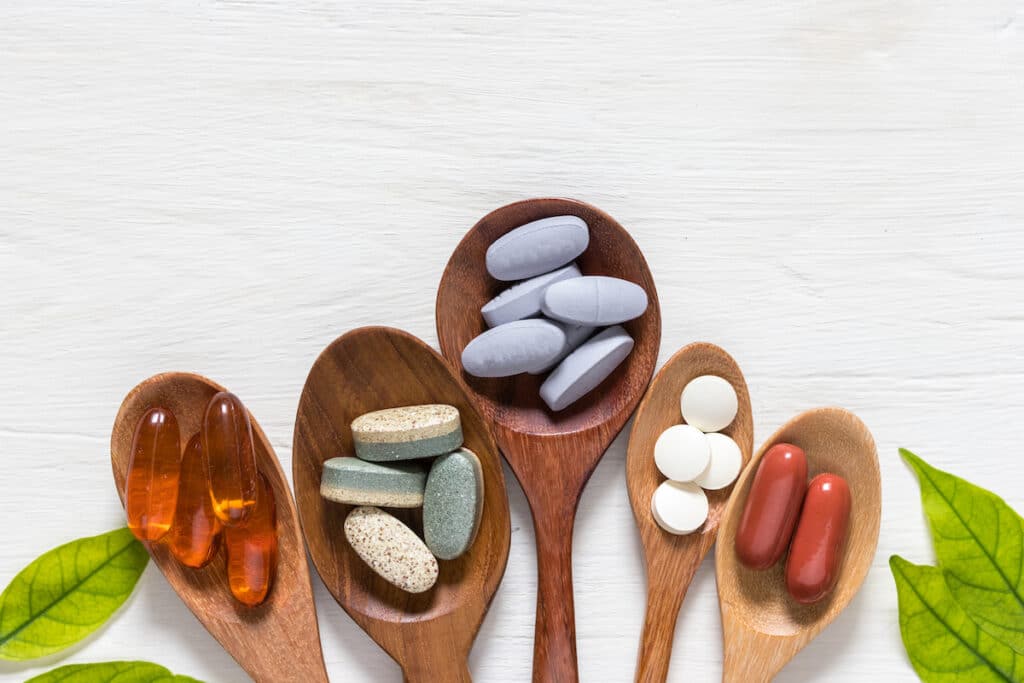
The supplement market is saturated with thousands of products claiming to “heal the gut”, it’s hard to know what’s legit and what’s not.
As dietitians, we’re uniquely positioned to provide evidence-based information regarding leaky gut syndrome and the supplements that can help.
Below we’re explaining what leaky gut is, what causes it, and the supplements that can actually help you fix it!
Let’s dig in.
What is leaky gut?
Leaky gut is also known as increased intestinal permeability, and as we refer to the gut we are really talking about the small intestine. To understand how the gut becomes “leaky”, we first need to understand how a healthy gut should function.
Here’s what healthy gut function looks like:
- The lining of your gut determines what substances can enter the bloodstream from the digestive tract
- A healthy gut acts as your first line of defense against potential enemies like bacteria, viruses, and other toxins
- It also blocks substances that can trigger an immune response if they get into the bloodstream (hello food sensitivities!)
A leaky gut means that things that shouldn’t escape the gut are able to get out. A lot of times this manifests as a variety of disease states where the cause is unknown but is blamed on inflammation (think autoimmune, IBS, migraines etc). Increased intestinal permeability opens you up to food sensitivities, makes you more vulnerable to viruses and bacteria, and weakens your immune system.
It’s also important to understand that while we don’t want increased intestinal permeability, we do need some intestinal permeability. Proper gut function requires the small intestine to let the right things in and out at the right time. The permeability of the gut is constantly changing based on various factors. Intestinal permeability is regulated internally by zonulin, chemicals like 5-HTP, and hormones (melatonin, estradiol, and thyroid hormone).
Zonulin deserves special attention because it’s used as a lab marker to measure intestinal permeability. When too much zonulin is produced intestinal permeability increases.
It’s also interesting to note (and probably not a coincidence) that increased zonulin production can make autoimmune disease symptoms worse.
Causes of leaky gut
Diet, medication, and lifestyle can all contribute to a leaky gut. Keep in mind that the amount and frequency of exposure, genetics, and baseline health status determine how each individual is impacted.
Factors that increase the risk of leaky gut include:
- Medications like antibiotics, NSAIDS, chemotherapy, radiation therapy, and oral contraceptives
- Xenobiotics such as mercury, BPA, and glyphosate
- Infections in the gut such as SIBO, parasites, and Klebsiella oxytoca bacteria
- Lifestyle factors (chronic stress, nightshift work, excessive high-intensity exercise)
- Micronutrient deficiencies
- Alcohol consumption
- Consumption of ultra-processed foods and fast food
- Food additives
- Gliadin (the protein in gluten)
- Food allergies
- Sugar
Symptoms of leaky gut
Leaky gut can manifest for some as digestive symptoms but in others, it can cause a wide array of symptoms that seemingly have nothing to do with the gut.
Leaky gut has been shown to play a role in several chronic conditions beyond digestive health including:
- Food intolerances and allergies
- Skin conditions
- Autoimmune conditions such as celiac disease, Crohn’s disease, ulcerative colitis
- Mental health conditions
How does a leaky gut impact the immune system?
When the gut is leaky, bacteria, undigested food, and other harmful toxins can get into the bloodstream. This is a big red flag for the immune system! It gets to work by launching attacks to protect the body against these invaders, which causes inflammation.
In a healthy gut, the immune system will discontinue this attack once the invader is gone. Unfortunately with a chronically leaky gut, the immune system never gets a break because these harmful substances continue to come through the gut lining.
Because your immune system is in a state of chronic overdrive, your body stays in a state of chronic inflammation.
This inflammatory cascade can lead to symptoms like:
- Bloating
- Abdominal pain
- Diarrhea
- Digestive issues
- Fatigue
- Acne
- Eczema
- High blood pressure
- Irritability
- Anxiety
- Depression
Leaky gut tests
While there are tests available, many practitioners agree that testing is not accurate enough to warrant the cost. Testing also does not identify the cause of your leaky gut which is necessary to know in order to ultimately heal.
These are the two most widely used tests:
- Intestinal Permeability Assessment – This test measures the presence of two undigestible sugars, lactulose, and mannitol, in your urine. Certain levels of these sugars could be from a breakdown of the intestinal barrier.
- Zonulin Test – This test measures the level of the zonulin protein. Elevated levels of zonulin have been associated with the barrier working less effectively.
Gut-healing supplements
As dietitians, we use a food-first approach to most things. You can’t out-smart a bad diet or poor lifestyle choices with supplements.
However, with a proper diet in place, supplements can be a helpful way to speed up the process of healing a leaky gut.
We’ve created a ranking system to help determine which supplements to use. We based this on the amount of current evidence to support each supplement specifically for helping with the gut barrier.
Our recommendation is to start with the best evidence supplements and add further support as needed. While all of these can potentially be helpful, you do NOT need to take every supplement listed below to feel better!
Here are a few of our best tips for healing leaky gut with supplements:
- Gut healing supplements typically work best on an empty stomach. We recommend taking them at least two hours after a meal or before bed
- The healing process can take a while, so be patient! For the average person with leaky gut, it can take up to six months for the gut to heal. Of course, this can be longer or shorter depending on how long you’ve had gut issues. And if you’ve been suffering from digestive issues for 10+ years, six months might not seem that bad 🙂
- Dietary changes in combination with supplementation will speed the healing process up even more. We love using LEAP/MRT for identifying which foods are causing inflammation and making it harder for your gut to heal.
Supplements with the best evidence for leaky gut
-
L-Glutamine
- Glutamine helps repair the gut lining by nourishing the cells and regulating gut function when mental or physical stressors such as strenuous exercise are present (1, 2).
- In a meta-analysis, consistent use of glutamine at 500mg to 1,500mg per day improved barrier function by repairing damage and increasing the tight junctions (3, 4, 5).
-
Probiotics
It’s probably no surprise that probiotics make our list of recommended supplements.
- Probiotics can help reverse leaky gut by reducing yeast and pathogenic bacteria which are common underlying causes of leaky gut.
- Probiotics also strengthen the tight junctions and preserve the mucosal barrier (6).
- When taken after strenuous exercise, researchers found probiotic supplementation could reduce zonulin output and therefore leaky gut (7).
- We recommend using caution when introducing probiotics that contain prebiotic fiber. Certain root causes of leaky gut like SIBO (small intestinal bacteria overgrowth) can get worse when consuming a prebiotic supplement.
-
Collagen Peptides
Supplements with good evidence for leaky gut
-
-
Vitamin D
- We have raved about vitamin D before and we are including it here because of the benefit it has on reducing symptoms in individuals diagnosed with Irritable Bowel Syndrome (IBS) and Inflammatory Bowel Disease (IBD) (10, 11).
- Since vitamin D helps regulate the immune system, sufficient vitamin D status is important for a balanced gut.
- Everyone should have vitamin D checked on a yearly basis (ask your doctor to add this to your bloodwork at your yearly physical).
- Some of the lowest vitamin D levels we see are in our IBD clients. Again, probably NOT a coincidence.
-
Zinc Carnosine
-
Butyrate
- Optimal (not too much and not too little) fiber is key for a healthy microbiome.
- Fiber helps to feed the good bacteria in your gut and promote detoxification through regular bowel movements.
- Supplementing with a specific fiber, called butyrate, increases mucus production, optimizes tight junctions, and promotes tissue repair (14).
-
Curcumin
-
Supplements for Digestive Support and Leaky Gut
-
-
Digestive enzymes
- Producing the right amount of digestive enzymes is key for optimal digestion. If you aren’t making enough enzymes, your food won’t be broken down well. Undigested food can travel through the gut lining into the bloodstream setting off the immune system.
- Supplementing with a comprehensive digestive enzyme will work with your body’s reduced supply of enzymes to maximize digestion.
- A comprehensive enzyme includes amylase, protease, and lipase to help with the breakdown of each macronutrient (carbohydrates, proteins, and fats).
- If you have had your gallbladder removed, then we recommend using a formula containing ox bile added for additional support.
- To keep your pancreas functioning at its best, we always recommend taking enzymes in the middle of your meal versus at the beginning.
-
Betaine HCl
- Used as a supplement for low stomach acid, Betaine HCl can help with breaking down food, absorbing nutrients, and keeping unwanted microorganisms like bacteria, parasites, and yeast from entering the small intestine.
- Optimizing stomach acid levels can improve leaky gut by maximizing digestion and absorption of nutrients that are necessary for healing such as iron and B12.
- A word of caution: we do recommend working with a practitioner when supplementing with Betaine HCl. Among other nuances, this supplement isn’t recommended for individuals with stomach ulcers or while taking a PPI.
-
Immunoglobulins
- Immunoglobulins, also known as antibodies, are proteins found in the gut that the immune system uses to fight gut invaders.
- When immunoglobulins come in contact with allergens or toxins, they bind to them and remove them to prevent damage.
- Supplementing with immunoglobins has been shown to protect the function of the gut barrier in individuals with IBD (18).
-
Berberine
- This plant-based compound has been shown to provide anti-inflammatory benefits due to its ability to help neutralize bacteria and yeast in the gut (19).
- If bacteria and yeast overgrowth are the cause of your leaky gut, this may be recommended as part of the treatment plan for healing.
-
Vitamin A
- Although uncommon, vitamin A deficiency has been shown to increase leaky gut. When vitamin A levels are optimized, intestinal permeability levels return to normal (20).
- Adequate vitamin A levels can typically be achieved by supplementing with a comprehensive multivitamin.
-
Quercetin
- This flavonoid has shown an anti-inflammatory impact on the gut by healing the lining from damage.
- It’s found in many plant foods that are commonly eaten such as red onions and kale. When taken at higher doses through a supplement, it’s been shown to promote optimal function of the gut barrier (21).
-
Supplements that might be helpful for leaky gut (more research is needed)
The supplements below have shown some promise in helping with leaky gut but more research needs to be done. All have been shown to restore the integrity of the gut lining by increasing mucus secretion. However, there isn’t significant evidence to support using them specifically for leaky gut.
-
- Aloe Vera Extract
- Slippery Elm
- DGL
- Marshmallow root extract
Conclusion
Chances are if you have any of the above-mentioned conditions, or have a history of exposure to the environmental contributors to leaky gut (and who doesn’t?) you’d benefit from gut healing support.
You may also benefit from some of our more specific gut health testing to identify the root cause(s) of your leaky gut. You can then work with one of our dietitians to use the information gained from testing to develop a personalized gut healing protocol.
To see the recommended supplements that we know and trust, you can head over to our Fullscript online supplement dispensary to check out our favorites.