


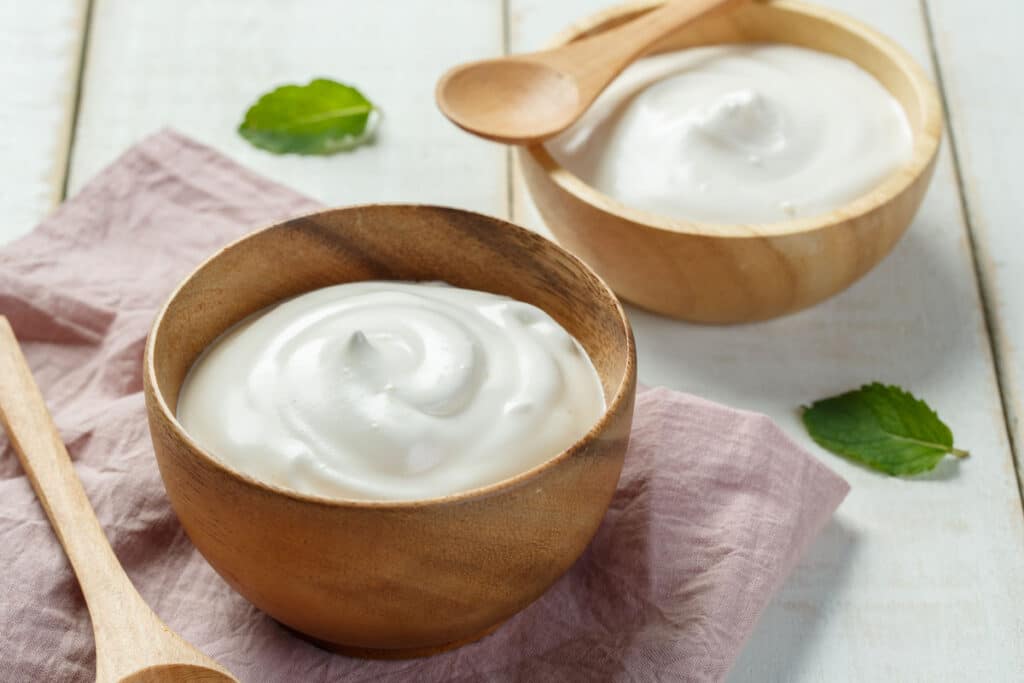
If you have IBS, trying to figure out which yogurt to buy can be really stressful.
As you meander through the dairy aisle, you’re likely overwhelmed with thoughts like these…
I’m almost positive dairy makes me feel worse…maybe I should try coconut yogurt. I actually wonder if oat yogurt would be better for me…because I think it might be healthier.
Well, maybe I should actually try Greek yogurt to see if that makes me feel any differently than the whole milk yogurt did. Oh, wait! I haven’t tried fat-free yogurt in a while, so I’ll do that this week!
Well, come to think of it, based on that Tik Tok I watched last night…I should probably just commit to being 100% dairy-free this week…
Are probiotics even good for me!? What if the probiotics in the yogurt are making me feel bad?
Whew, it’s exhausting just looking through that aisle!
We’re hoping to take away some of that confusion so you know which yogurt to buy if you have IBS. And…because it’s our favorite season, we’re throwing in a low FODMAP yogurt recipe perfect for fall!
If you’re wondering if you have IBS, here are the most common symptoms:
- Abdominal pain
- Diarrhea, constipation or both
- Bloating or distention
- Excessive gas
- Increased sensitivity in the GI tract
If you’ve been diagnosed with IBS or experience the symptoms listed above, a low FODMAP diet could help control your symptoms (1).
If you’re not familiar with the low FODMAP diet, check out our Elimination Diet Guide blog post for more information. Then, come back here for a delicious low-FODMAP pumpkin yogurt recipe.
There are affiliate links throughout this article. As an Amazon Associate, The Nutrition Clinic for Digestive Health earns a small commission from qualifying purchases at no additional cost to you.
Table of Contents
How to Diagnose IBS
IBS (irritable bowel syndrome) impacts 7%-16% of the population – women are twice as likely to get diagnosed compared to men (2, 3). This condition could be more prevalent in women, or these stats could be a reflection of women seeking healthcare more often than men.
Also, because there tends to be a lot of embarrassment around gastrointestinal problems, this is a condition people are less likely to seek help for. The true prevalence of IBS is likely much higher.
Because IBS is a functional bowel disorder, other gastrointestinal diseases must first be ruled out.
If you have any of the symptoms listed below in addition to the IBS symptoms previously listed, you should see a doctor to rule out more serious conditions:
- Waking in the night to have a bowel movement
- Unexplained weight loss
- Fever
- Vomiting
- Blood in stool or persistent anemia
These conditions should also be ruled out before getting an IBS diagnosis:
- Celiac Disease (gluten allergy)
- Inflammatory Bowel Disease (Ulcerative Colitis, Crohn’s)
- Diverticulitis
- Ovarian or colon cancer
- Endometriosis
- Reduced pancreatic enzymes
- Bile acid malabsorption
Is Yogurt Low FODMAP?
You may be surprised to learn that some dairy products are FODMAP-friendly!
For dairy to be allowed on a low FODMAP diet, it must be lactose-free or at least very low in lactose content (less than a few grams).
According to Monash University, the leading FODMAP researchers, even people that are lactose intolerant can handle 12-15g of lactose spread throughout the day. For reference, here are the approximate amounts of lactose in commonly eaten foods:
- Regular yogurt – 9-14g per cup
- Milk – 11g per cup
- Cheddar cheese – 0-2g per ounce
Because individual tolerances vary, we recommend starting with lactose-free and then testing small amounts.
Lactose-free yogurts made from cow’s milk have lactase (the enzyme that breaks down lactose) added to them so that people who are lactose intolerant (or trying low FODMAP 🙂 ) have a better chance of tolerating them.
Unfortunately, the reasons people have issues with dairy products can go beyond just lactose. Some people find that other components of dairy (such as whey and casein) make it hard to digest. You can read more about these nuances and our opinion on dairy here!
Lactose-Free Yogurt Brands
Our favorite brands of lactose-free yogurts are listed below, each one is FODMAP-friendly. If you’re avoiding dairy and miss having yogurt in your diet, try the coconut-based yogurt options.
- Green Valley Organics Lactose-Free Whole Milk Yogurt
- FAGE Best Self Lactose-Free Plain
- Cocoyo Plain Coconut Yogurt
- Harmless Harvest Organic Coconut Yogurt
- So Delicious Coconut Milk Yogurt Alternative, Unsweetened Vanilla
Is Greek Yogurt Low FODMAP?
Greek yogurt contains lactose, so it is NOT low FODMAP.
Greek yogurt is made by straining regular yogurt, which removes some of the lactose. This produces a thicker texture with more protein. It’s actually a great food to have in your diet if you don’t suspect any issues with dairy.
And…even if you do think you’re lactose intolerant, as we mentioned previously, most people can still tolerate up to 12-15g of lactose per day, especially if spread between meals (3). For reference, 1 cup of Greek yogurt contains between 4-6g of lactose.
Greek Yogurt Brands
Here are our favorite brands of Greek yogurt:
- Stoneyfield 100% Grassfed Plain Greek Whole Milk Yogurt
- Wallaby Organic Plain Aussie Greek Whole Milk Yogurt
- Chobani Plain Greek Whole Milk Yogurt
- Siggi’s Plain Whole Milk Yogurt – even though this one is technically Icelandic style, it has a similar protein content to Greek yogurt which is why we’re including it here
Probiotic Yogurt Benefits
Yogurt is a probiotic-rich food!
Probiotic-rich foods contain good bacteria that help to build an abundant and diverse microbiome.
Having a lot of good bacteria and a wide array of good bacteria is key for healthy digestion, a strong immune system, and avoiding chronic diseases.
Other benefits of probiotics include:
- Better intestinal motility – this translates to a healthier balance in your microbiome and healthier bowel movements (4)
- Decreased inflammation – say goodbye to mysterious symptoms (headaches, rashes, fatigue, joint pain, etc.) and hello to decreased chances of having a chronic disease (5)
- Reduced ability for pathogenic organisms to grow – meaning you’ll have a better defense against stomach bugs and food poisoning episodes (6)
When working with clients who have IBS, we typically recommend probiotics with Lactobacillus and Bifidobacterium strains.
Here’s why:
- Lactobacillus strains (typically found in yogurt) can reduce abdominal pain and excess gas
- Bifidobacterium strains can lessen general symptoms and feelings of urgency in those with diarrhea (7).
Since a healthy microbiome is essential to overall health, in addition to supplementing with probiotics, we also recommend including at least one serving of a probiotic-rich food each day.
Best Probiotic Foods
Foods high in probiotics include:
- Kimchi
- Sauerkraut
- Kombucha
- Miso
- Fermented pickles ( or other fermented vegetables)
Low FODMAP Pumpkin Yogurt Recipe
Low FODMAP Pumpkin Yogurt


- Whisk
- Bowl
- 1/2 Cup Yogurt (lactose free)
- 1/4 Cup Pumpkin (puree)
- 1 Tbsp Maple Syrup
- 1 Tbsp Seeds (Pumpkin, flax or chia )
- 1 tsp Pumpkin pie spice ()
All you have to do is mix the yogurt, pumpkin, maple syrup and pumpkin pie spice.
Top with seeds and enjoy!
You can buy pumpkin pie spice in the store or make this easy homemade version!
Is Pumpkin Low Fodmap?
A serving size of up to ⅓ cup of pumpkin is considered to be low fodmap. Because it contains some GOS and fructans, you’ll need to limit the amount of pumpkin you consume.
Conclusion
So is yogurt good for IBS?
Maybe – it depends on your unique situation! 😉
We recommend starting with a lactose-free version first while also keeping the rest of your diet low FODMAP.
If dairy products don’t work for you at all, then be sure to include a dairy-free fermented food daily for good gut health!
If you’ve gone through a low fodmap diet and aren’t seeing symptom improvement or are unable to introduce any fodmap groups, it’s time to work with a dietitian who can help you get to the root cause of your digestive problems.